Trench Digging for Electrical Service to a New Concrete Pad
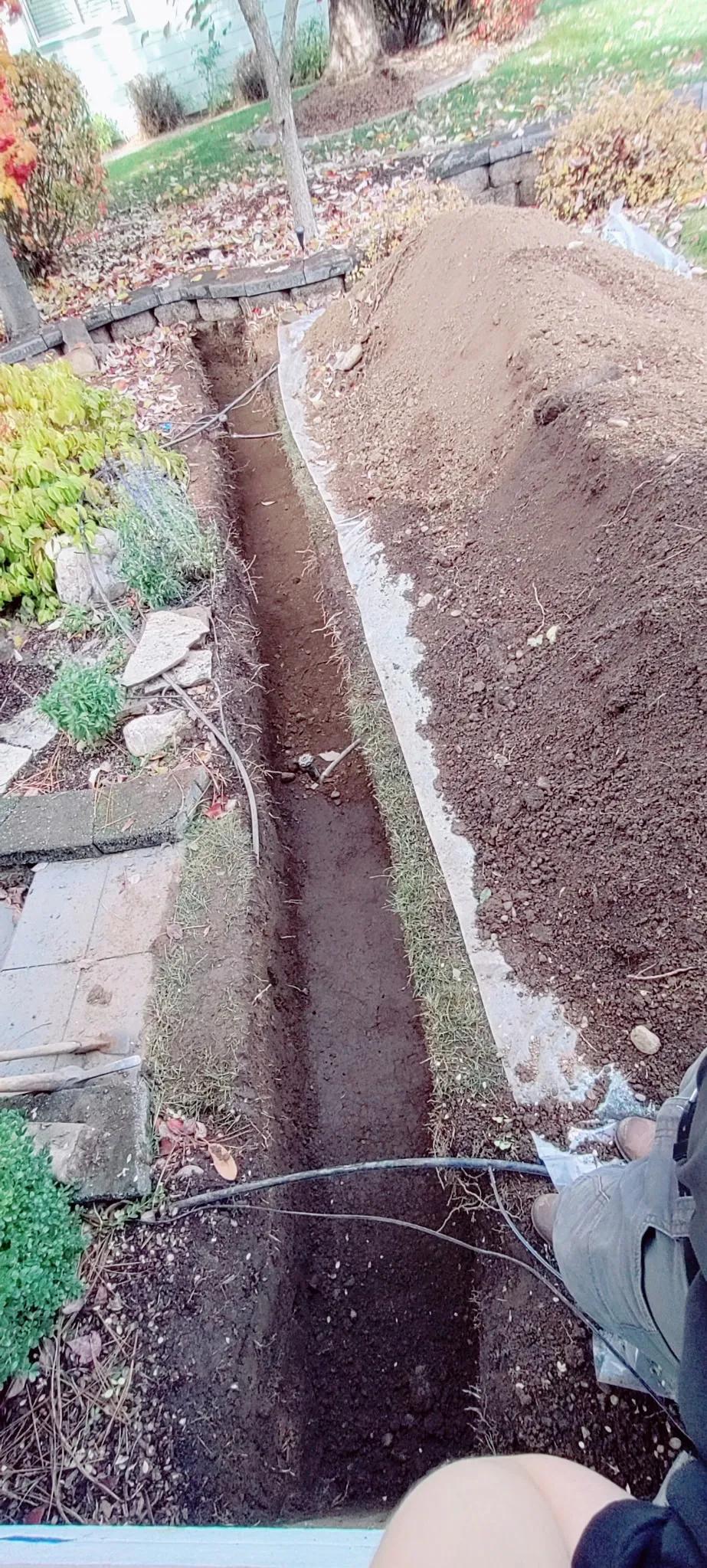
Digging a trench for electrical service sounds simple enough - but do it wrong and you're looking at torn-up irrigation lines, damaged landscaping, and a yard that takes months to recover. That's the part most people don't think about until it's already a problem.
Here's what we were working with on this one: a run from the existing service to a new concrete pad, cutting through an established yard with existing irrigation and mature landscaping on both sides. The goal wasn't just to get the trench dug - it was to get it done without leaving a mess behind.
We kept the excavated soil contained in a clean, tight row along the trench line. That matters more than it sounds. When soil gets scattered across a yard, it compacts into the grass, clogs irrigation heads, and makes backfill way harder than it needs to be. Keeping it organized from the start saves real time and prevents real damage.
Protecting the irrigation system was just as important. We took care to work around existing lines rather than through them - because hitting a line mid-job turns a half-day project into something much longer and more expensive for the homeowner. Knowing what's in the ground before you dig is a big part of doing this kind of work correctly.
The trench itself came out clean and straight, with the walls intact and the depth consistent throughout. That kind of precision makes the electrical installation easier and ensures the conduit or wire sits exactly where it needs to. It's the behind-the-scenes prep work that sets the whole job up for a clean finish.